Most businesses today have accumulated mountains of data, from sales transactions and customer interactions to website analytics and operational metrics. But despite the wealth of information at their fingertips, many still struggle to use it to make smarter decisions and drive measurable results.
What’s tripping them up? The strategic and technical know-how to turn that raw data into actionable insights.
Siloed systems and outdated processes leave data messy, fragmented, and hard to wrangle. Even when businesses do manage to produce regular reports, they often include inaccuracies, duplicate records, or incomplete information—leaving them with chaotic outputs and no clear path to ROI.
If your business is stuck in this trap, a data analytics consultant could be your way out.
Data analytics consultants transform scattered data into trusted, usable insights that help you make smarter decisions, solve complex problems, and fuel real growth. Whether you’re just beginning to explore data analytics or you’ve hit a wall with your current approach, this guide will help you understand what data analytics consultants do, when to hire one, and what to look for.
What Does a Data Analytics Consultant Do?
A data analytics consultant is a strategic partner who ensures your data is organized, accurate, and ready to guide every decision your business makes.
In other words, they make your data work for you, ensuring it’s clean, accessible, and aligned with your objectives so you can use it to make confident, informed decisions.
Here’s a closer look at a data analytics consultant’s core responsibilities:
- Data Strategy and Management: Consultants help you define your data goals and build a roadmap to get there, designing a data infrastructure that’s scalable, business-aligned, and ready to support everything, from reporting to advanced use cases, like AI.
- Data Collection and Integration: They connect the dots between siloed systems (e.g., CRM, ERP, marketing platforms, and financial tools) to centralize all data in one reliable source of truth.
- Data Cleaning and Preparation: Before you can use data to make decisions, it must be accurate. Data analytics consultants identify and fix common data issues (e.g., duplicates, inconsistent formats, and outdated records) to lay the groundwork for reliable analysis.
- Analysis and Modeling: Using statistical methods and business logic, they uncover patterns, forecast future scenarios, and build models to help you understand what’s driving or hindering performance.
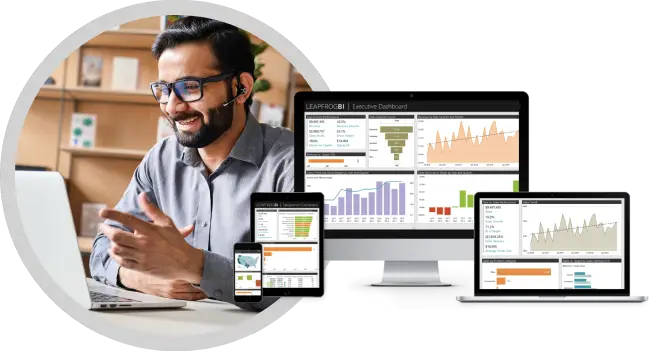
- Reporting and Visualization: Data analytics consultants create focused, intuitive dashboards that clearly communicate the insights each stakeholder needs.
- Enablement and Training: Finally, they empower your teams to use analytics confidently. That includes providing hands-on training, documentation, and change management support to embed data into day-to-day decision-making across your business.
The best data analytics consultants won’t just hand you dashboards and walk away. They help you build a data-driven culture that lasts.
When You Should Consider Hiring a Data Analytics Consultant
With powerful tools like Power BI and Tableau on the market, it can be tempting to take a DIY approach to data analytics. But tools alone aren’t enough to replace hands-on experience or technical savvy. At the end of the day, you need someone who knows how to intelligently use those tools to design, build, and manage a curated data strategy.
That’s where a data analytics consultant holds the key.
Not sure if it’s time to bring in a professional? Watch for these warning signs in your business:
1. Lack of In-House Expertise
Your team is great at what they do—but unless “what they do” is build modern data architecture and design analytics workflows, then you may lack the specialized skills needed to get real value from your data.
From data modeling and integration to visualization and reporting, data analytics requires a combination of technical ability, design savvy, and business intuition.
Without a full team of data analysts, data engineers, and report developers, your business will likely struggle to build, scale, and sustain an effective analytics program. But with a data analytics consultant, you can tap into these skills on demand—without the overhead of in-house hires.
2. Unclear Data Strategy
Maybe you’ve already got a few dashboards in place and regularly run reports—but you’re still confused about what your data is telling you. Your goals aren’t clear; your metrics aren’t aligned with real-life outcomes; and your reporting feels more reactive than strategic.
In short: You’re looking at numbers, but you don’t understand what they mean or how you can use them to make better decisions.
This kind of strategic gap doesn’t just slow down day-to-day decision-making; it can also stall future initiatives. According to research from Gartner, 63% of organizations either don’t have (or are unsure if they have) the right data management practices for AI. This leaves them unprepared to launch new programs. In fact, Gartner predicts that 60% of AI projects will be abandoned by 2026 due to a lack of AI-ready data.
A data analytics consultant brings strategy to this confusion. They’ll help you define what success looks like, establish meaningful KPIs, and build a roadmap to connect your data efforts to business outcomes.
Not convinced you need a data and analytics consultant for AI initiatives? Discover the Top 10 Ways Data Issues Will Surely Kill Your AI Project.
3. Data Chaos
According to an Ivanti survey of more than 1,200 IT and cybersecurity pros, more than half of tech professionals say their organization’s security and IT data are siloed. And those silos have consequences. Two in five say data siloes result in IT inefficiencies, while nearly 30% say “data deficiencies preven[t] them from using AI tools effectively.”
Sound like your business?
It’s a common problem: Teams try to work with data before it’s ready for analysis. That means reports get generated from scattered systems, inconsistent formats, and outdated exports, leading to messy, unreliable results that can leave stakeholders more confused than informed.
A data analytics consultant brings order to this chaos. They help you clean up your stack, integrate your systems, and standardize how your data is stored and shared so your reporting is accurate, consistent, and built on a foundation you can trust.
4. Underperforming Dashboards
Just because you have dashboards doesn’t mean they’re useful or effective.
Take a step back and ask yourself: Can you trust the data in your dashboards? Are they designed to help people make better decisions? Are they actually getting used?
Creating truly useful dashboards is much easier said than done. Usually, dashboards are either too complex, too shallow, or too disconnected from day-to-day needs. Even if they’re intuitive and easy to navigate, if they’re powered by inaccurate data, then they’ll lead to poor decision-making—or get ignored entirely.
A data analytics consultant can rebuild your reporting strategy to ensure your team only works with dashboards that are accurate, trustworthy, and ready to support real-life decision-making.
5. Scaling or Digital Transformation
Your business is growing, or you’re undergoing a digital transformation. That’s exciting—but these are also moments where analytics efforts fail to keep pace with evolving priorities and operations.
According to the International Data Corporation (IDC) Worldwide Digital Transformation Spending Guide, global digital transformation spending is projected to hit $3.9 trillion by 2027, up from $2.5 trillion in 2024—but only 21% of companies are successfully scaling their digital transformation initiatives.
Whether you’re onboarding new systems, launching a new product, or entering new markets, a data analytics consultant ensures your analytic capabilities scale with you. They’ll optimize your data infrastructure, streamline your reporting, and build systems that evolve with your business so you can stay data-driven, no matter how fast things move.
How to Hire a Data Analytics Consultant
Hiring the right data analytics consultant starts with knowing what you’re trying to achieve—or at least what problems you’re trying to solve. Without a clear list of priorities, it’s harder to choose the right partner to help you get there.
Follow this three-step list to find the right fit:
First, Define Your Goals and KPIs
Before you talk to any consultant, get clear on your business problems. What are you trying to solve? Do you need to reduce churn? Improve forecasting? Identify your most profitable customers? Streamline reporting for leadership?
By taking the time to define your goals upfront, you’ll be better prepared to evaluate consultants on their ability to deliver the outcomes that matter to your business—not just which tools they use or how many certifications they have.
Then, Evaluate Experience and Technical Skills
Ask prospective consultants about their project background. Do they have experience working in your industry? What kinds of clients have they supported in the past? What tools do they typically work with?
You don’t need to get too hung up on specific technologies or certifications. What matters most when hiring a data analytics consultant is their approach to strategy and building scalable systems.
Are they detail-oriented? Do they ask thoughtful questions? Can they connect data work to your business’s unique goals?
One green flag to watch for: A data analytics consultant who prioritizes data quality and long-term scalability over quick turnarounds and short-term gains.
Finally, Compare Engagement Models
Not all consultants work the same way. Look for a partnership that matches your business’s pace, structure, and goals.
Here’s a look at some common consultancy models and how they typically fit different needs:
- Hourly: Good for small, quick jobs or advisory sessions.
- Project-Based: Ideal for defined deliverables, like a dashboard build or warehouse migration.
- Managed Analytics: Best for businesses that want a long-term partner to manage, optimize, and scale their analytics—without having to build and maintain an in-house team.
Common Pitfalls to Avoid When Hiring
Like any strategic decision, hiring a data analytics consultant is an investment and requires thoughtful evaluation.
A right-fit partner can transform the way your business uses data to operate, grow, and make smarter decisions. But the wrong consultant can waste time, drain your budget, and leave your data messier than before.
To avoid setbacks and find the right match from day one, watch out for these red flags in hiring interviews:
- Not thinking long-term: Analytics isn’t a one-and-done project. You need a consultant who plans for scale and sustainability—not short-term fixes that won’t hold up over time.
- Focusing on tools instead of outcomes: Be wary of consultants who fixate on their favorite software. The right partner should focus on your goals and spend more time talking about strategy than tools.
- Ignoring data quality: No matter how sleek dashboards look, they’re ultimately useless without clean data. A good consultant prioritizes data quality, accuracy, and consistency before building anything.
- Calling themselves a do-it-all generalist: Strategy, modeling, and reporting require different skillsets; it’s rare that one person can do it all well. A team-based approach gives you deeper expertise and more flexibility.
Why LeapFrogBI Is the Data Analytics Partner You Can Rely On
We don’t just hand you dashboards and then walk away. We deliver end-to-end analytics solutions that grow with you so you can make data-backed decisions—now and as your business grows.
Here’s why clients choose us as a long-term partner in data analytics consulting:
Team-Based Expertise
We give you access to a full team of analytics professionals with specialized skills across the data lifecycle, including data strategy, data modeling, ETL, report authoring, and more. That’s broader, deeper expertise than any single freelancer or in-house hire.
Plus, because we operate as an external partner, you can scale resources up or down as needed—without the overhead or responsibilities of managing your own in-house team.
Thinking about hiring in-house? Make sure you know what you’re in for. Here’s What You Need to Know Before Hiring an In-House Data Analyst.
Managed Analytics Model
Unlike freelancers or other consultants who deliver one-off projects and move on, our managed analytics services focus on long-term partnership and continuous improvement.
That means we’re in it for the long haul—and invested in supporting your evolving goals. We provide ongoing optimization and hands-on support, like refining data pipelines and updating dashboards, to help you pivot when you need to and scale efficiently as your business grows.
For example, suppose you decide to roll out a new CRM. We can adjust your analytics environment in real time so you can count on consistent, reliable reporting, even as systems change.
Proven Results
We’ve worked with clients across industries, from healthcare to insurance to financial services. We know that every business has unique challenges, goals, and data environments—and we never implement a cookie-cutter, one-size-fits-all approach.
Instead, we tailor every analytics solution to each client’s specific needs, infrastructure, and strategy, so you get insights that make sense for your business and how you operate.
Just look at what we did for MedEx, a medical supplies provider. When their fragmented data made it nearly impossible to track revenue leakage, we built a centralized reporting solution to consolidate data and automate manual revenue cycle processes—helping them uncover nearly $1M in lost revenue annually.
Learn more about how we did it with data analytics consulting: How LeapFrogBI helped MedEx uncover approximately $1M annually in lost billing.